Malachite Crystal: Heart Healing & Emotional Transformation
We may earn money or products from the companies mentioned in this post.
There are some crystals that sit quietly on a shelf looking pretty, and then there’s malachite — the one that practically vibrates with intention the moment you pick it up. Bold, green, and unmistakably alive-looking, it has a reputation for shaking things loose in the best possible way.
Malachite is known as the stone of transformation, and once you understand what it actually does, that title makes complete sense. It works on the heart chakra to help you release emotional patterns that have overstayed their welcome, encouraging you to face what needs healing and make space for something better. If you’ve been carrying grief, fear, or heavy emotional weight, malachite is frequently used as a heart-centred stone built for exactly that kind of release.
This guide covers everything from its distinctive appearance and deep history through to its healing properties, how to use it safely, and what you need to know about caring for it properly.
Enhance Your Spiritual Practice
Discover our collection of digital planners and mystical tools designed to deepen your journey with tarot, crystals, and astrology.
Visit Our Shop
What Is Malachite?
Malachite is a copper carbonate mineral with one of the most distinctive appearances in the crystal world. Those swirling bands of deep emerald and lighter green are impossible to mistake — no two pieces look exactly alike, which makes every malachite specimen feel uniquely yours.
It has a relatively soft hardness (around 3.5 to 4 on the Mohs scale), which means it’s more delicate than many popular crystals. This is worth knowing before you start wearing it daily or submerging it in water. It can scratch or dull more easily than harder stones like clear quartz or obsidian, so it benefits from a little extra care.
The name comes from the Greek word malakhe, meaning mallow — a reference to the rich green colour of mallow leaves. Polished malachite has a silky, almost waxy lustre, and larger tumbled pieces often have that hypnotic banded pattern that’s been prized by artists and collectors for centuries.
Malachite’s Colour and Banding
The characteristic banding in malachite forms during its natural growth process, as copper-rich water deposits layer upon layer over time. The result is concentric rings, eye-like patterns, and flowing stripes that range from near-black green to a bright, almost mint tone.
This variation in colour within a single stone is part of what makes malachite so visually compelling. When used in jewellery or polished into spheres and palm stones, that patterning becomes a genuinely stunning focal point. Many people find themselves lost in the whorls of a well-formed malachite piece in the same way you might stare into a fire.
Malachite Throughout History
Malachite has been used by humans for at least 10,000 years, making it one of the oldest crystals in recorded human use. Ancient Egyptians were particularly devoted to it — they mined it extensively from the Sinai Peninsula and used it as eye shadow (kohl), pigment for murals, and decorative inlay in jewellery and amulets.
The colour green in ancient Egypt was associated with fertility, new life, and the god Osiris. Wearing or using malachite was considered protective, and Egyptian women used it cosmetically as well as spiritually. It was so valued that it was one of the few materials used to decorate the pharaoh’s burial chamber.
Malachite in the Ancient World
The ancient Greeks and Romans also used malachite pigment extensively — Renaissance painters later revived this practice, grinding malachite into a vivid green pigment for everything from portraiture to altarpieces. The colour wasn’t always stable in oil paint, which is partly why many old master paintings have that interesting brownish-green in what was originally intended to be a lush green sky or landscape.
In Russia, Catherine the Great was famously devoted to malachite. The Winter Palace contains an entire Malachite Room, completed in 1838, where columns, fireplaces, and decorative elements are clad in the stone. It remains one of the most spectacular uses of a single crystal in interior design anywhere in the world.
Across different cultures, malachite was consistently associated with protection, particularly during travel and childbirth. Medieval Europeans believed it could warn of approaching danger by cracking or changing colour — a belief that speaks to how deeply people sensed the stone’s responsive, absorbing quality.
Malachite’s Healing Properties
In contemporary crystal work, malachite is primarily known as a heart chakra stone with a specific gift for emotional release and transformation. It’s not a gentle, quiet healer — it tends to amplify what’s already present and bring buried feelings to the surface so they can be processed and released.
This is why malachite is often described as intense or powerful by people who work with it regularly. If you’re in a settled, peaceful place emotionally, it might simply feel grounding and heart-opening. If you’re carrying unexpressed grief, anger, or old wounds, malachite has a way of making those things impossible to ignore — which is exactly the point.
Heart Chakra Healing
The fourth chakra, located at the centre of the chest, governs our capacity for love, compassion, forgiveness, and connection. When this energy centre is blocked or imbalanced, you might experience difficulty trusting others, a tendency to close off emotionally, fear of vulnerability, or an inability to let go of past hurts.
Malachite is frequently used to address all of these patterns. Its energy is direct and purposeful — it doesn’t bypass the hard parts. Instead, it supports you in sitting with difficult emotions long enough to understand and release them. Many people who work with malachite during grief, relationship endings, or periods of major change report that it helps them move through those experiences with more awareness and less stuckness.
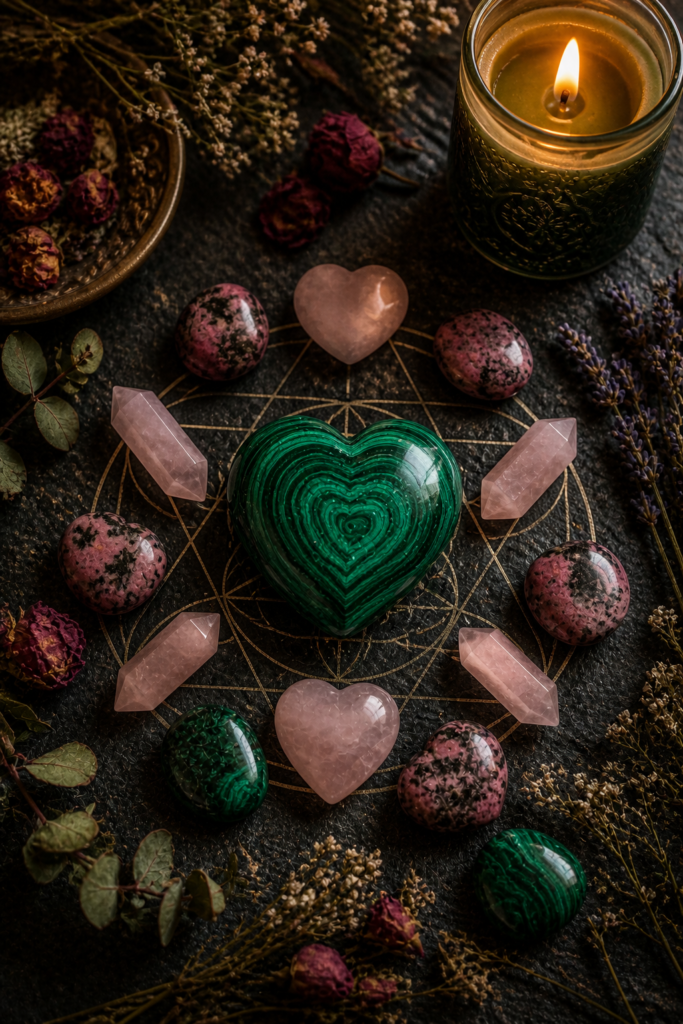
If you’re also exploring chakra balancing as part of your practice, malachite pairs particularly well with rose quartz for the heart — malachite handles the clearing while rose quartz brings in the softness and self-compassion.
Emotional Transformation and Release
The “stone of transformation” label isn’t just about big dramatic shifts. Malachite also works quietly on day-to-day emotional patterns — the defensive responses, the habitual ways of reacting, the beliefs about yourself that you’ve carried so long they feel like facts.
Crystal practitioners often describe malachite as helping to reveal the root cause of emotional pain rather than just the surface symptom. You might find that working with malachite over time brings a pattern of thinking into sharp relief, making it easier to understand where it came from and — crucially — to decide whether you want to keep it.
This makes it particularly useful during times of conscious personal growth. If you’re doing shadow work, therapy, or any kind of inner reflection, malachite can act as a support stone that helps you stay open and courageous enough to keep going. It’s worth exploring how the Death Tarot Card echoes this same energy of necessary endings and transformation — both are deeply linked to the idea that real change requires letting something go.
Courage, Self-Awareness, and Growth
Beyond its heart-centred work, malachite is associated with courage — specifically the courage required to be honest with yourself and to make changes that feel risky. It supports self-awareness without harsh self-judgement, encouraging a clear-eyed look at where you are and where you want to go.
Many people use malachite when facing difficult decisions, particularly those involving leaving something familiar behind. Whether that’s a relationship, a job, a belief system, or a version of yourself you’ve outgrown, malachite tends to support the willingness to step forward even when the outcome feels uncertain.
Malachite and the Chakras
Malachite’s primary association is with the heart chakra (Anahata), but its connection to the solar plexus chakra is also worth noting. The solar plexus governs personal power, confidence, and sense of self — areas that often need attention alongside heart work.
When we’re healing old emotional wounds, our sense of personal agency can also become fragile or depleted. Malachite’s connection to both centres means it can support healing while simultaneously strengthening your capacity to act on what you’re learning about yourself.
For a fuller picture of how all the chakras work together, the seven chakras beginner’s guide is a great starting point. Understanding the full system makes it much easier to work intentionally with any chakra stone.
How to Use Malachite
Malachite is versatile in how it can be incorporated into practice, though there are a few important safety notes to keep in mind.
In meditation: Holding a malachite palm stone or tumbled piece during meditation is one of the most direct ways to work with its energy. Place it over your heart centre if you’re lying down, or simply hold it in your hands and set an intention related to what you want to release or transform. Malachite pairs beautifully with crystals in your daily meditation practice — it deepens focus and brings emotional clarity.
As jewellery: Malachite jewellery, particularly necklaces and pendants that sit near the heart, is a popular choice. Keep in mind that malachite is relatively soft, so pendants fare better than rings or bracelets that might take more daily impact. Avoid getting malachite jewellery wet — more on that below.
In your home or workspace: Placing malachite in your home creates an ambient supportive energy, particularly in spaces where you want to encourage open communication, creativity, or emotional processing. Many people keep a piece on their desk or in their bedroom. Its visual beauty also means it genuinely enhances any space aesthetically.
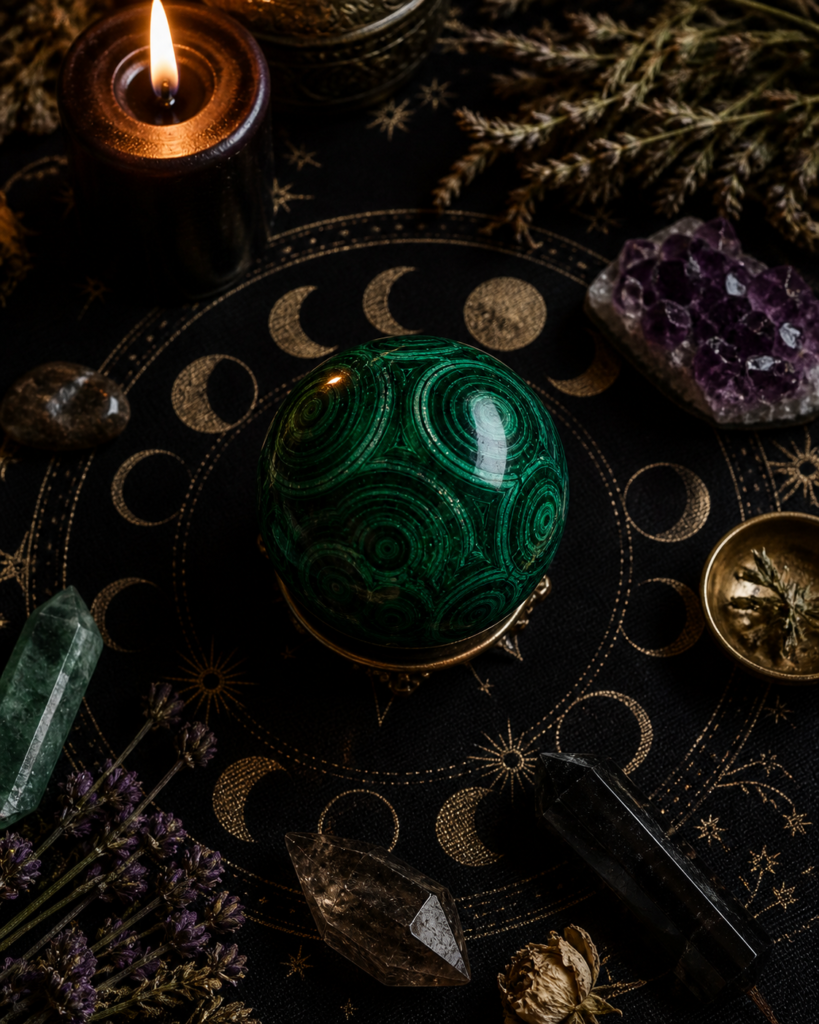
In tarot or oracle card readings: Malachite works well as a companion stone during readings, particularly when you’re exploring emotional themes, relationship dynamics, or situations requiring honest self-reflection. If you’re just starting out with readings, the complete beginner’s guide to tarot cards is worth bookmarking.
On a crystal grid: Malachite can be used as a heart-centred stone in crystal grids designed for emotional healing, abundance, or transformation. Pairing it with rose quartz, rhodonite, and clear quartz creates a powerful heart-healing combination.
If you want to track your crystal work over time, the Crystal Healing Companion journal is a great place to log your malachite sessions, note what comes up emotionally, and see how your practice evolves.
Important Safety Notes for Malachite
Malachite contains copper, which means there are a few specific care guidelines that don’t apply to most other crystals.
- Never use water to cleanse malachite. Contact with water can damage its surface over time and — more importantly — malachite can release copper compounds when wet. Never make a malachite elixir or gem water for drinking.
- Handle raw or rough malachite with care. The dust from raw malachite can be toxic if inhaled. Tumbled and polished malachite is safe to handle normally, but avoid sanding, drilling, or cutting malachite without proper protective equipment.
- Cleanse it often. Malachite is described by many practitioners as an absorbing stone that takes on heavy or negative energy quickly. Regular cleansing — through sound, moonlight, selenite, or smudging — is particularly important with this stone. Avoid leaving it uncleansed for long periods.
Cleansing and Caring for Malachite
Because of malachite’s copper content and relative softness, its care routine differs from most crystals.
Safe cleansing methods:
- Moonlight (particularly full moon energy) — simply leave it on a windowsill or outside overnight
- Sound cleansing with a singing bowl, bell, or clapping
- Placing it on or near selenite, which is widely used to cleanse other crystals without needing water
- Smudging with sage, palo santo, or other cleansing smoke
Charging methods:
- Sunlight in brief, gentle doses — extended sunlight can fade the colour over time, so a few hours rather than a full day is wise
- Setting it on the earth or soil if you have garden access
- Intention setting during meditation
Store malachite away from harder crystals that could scratch it. A soft pouch or padded box is ideal. Keep it away from moisture, prolonged sunlight, and harsh chemicals including perfumes and cleaning products.
Malachite in Your Crystal Collection
If you’re building a heart-centred crystal collection, malachite is a genuine cornerstone piece. It works beautifully alongside other heart chakra stones — rose quartz for unconditional love and gentleness, rhodonite for healing emotional wounds and self-love, and moonstone for intuition and emotional balance.
For protection and grounding alongside emotional work, pairing malachite with black tourmaline is a particularly effective combination. The tourmaline creates an energetic boundary that helps make the more vulnerable heart work of malachite feel safer.
If you’re new to building a crystal practice, the crystals for tarot readings guide covers which stones work well as reading companions — and malachite is worth keeping in mind for any reading with themes of change or emotional truth.
Fun Facts About Malachite
A few things that make this crystal even more fascinating:
- Malachite was used as a children’s protective amulet in many ancient cultures. Parents would carve an eye symbol into a malachite piece and hang it near a child’s crib to ward off harm.
- The Ural Mountains of Russia were once the world’s primary source of malachite. Some of the largest natural malachite specimens ever found came from that region — pieces weighing hundreds of kilograms.
- Malachite’s distinctive patterning is used as a test of authenticity. Dyed howlite or resin imitations rarely replicate the natural banded pattern convincingly, so learning to read the pattern is a useful skill for anyone buying malachite.
- It was used as a green dye in medieval Europe, both for textiles and in illuminated manuscripts.
- The first industrial use of copper is believed to have developed partly from working with malachite, which contains a significant proportion of copper by weight.
Final Thoughts on Malachite
Malachite isn’t a crystal for people who want things to stay comfortable. It’s for the moments when you know something needs to shift — when you’re ready, even if you’re a little scared, to look honestly at what’s holding you back and to move through it rather than around it.
That’s not a quality to be cautious of. It’s precisely what makes malachite so valuable. True heart healing isn’t always soft and quiet — sometimes it requires the kind of clear, purposeful energy that malachite brings in abundance.
If you’re drawn to it, trust that instinct. This is a crystal that tends to arrive in people’s lives at exactly the right moment.
If you already work with malachite, I’d love to hear about your experience in the comments. Has it brought something unexpected to the surface? Do you use it for specific kinds of emotional work? Share what’s worked for you below.
Continue Your Journey
- The Seven Chakras: A Complete Beginner’s Guide — understand the energy system malachite works within
- Rhodonite Crystal: Healing the Heart & Finding Self-Love — a gentler companion for heart chakra work
- Black Tourmaline Crystal: Your Guide to Protection & Grounding — powerful pairing for safe emotional healing
- How to Use Crystals in Your Daily Meditation Practice — practical ways to deepen your crystal work
- Crystal Folklore: Myths and Legends Behind Popular Crystals — more on the rich history of crystals across cultures
Ready to go deeper into your crystal practice? Sign up for the Weird Headlines newsletter and get new guides, crystal profiles, and practice tips delivered straight to your inbox.