Amethyst: A Crystal of Beauty and Belief
We may earn money or products from the companies mentioned in this post.
Amethyst, with its stunning purple hue, has captivated humans for millennia. This beautiful quartz crystal has been prized not only for its aesthetic appeal but also for its purported metaphysical properties.
From ancient civilizations to modern crystal enthusiasts, amethyst has maintained its allure, weaving its way through history, mythology, and contemporary wellness practices.
Physical Properties
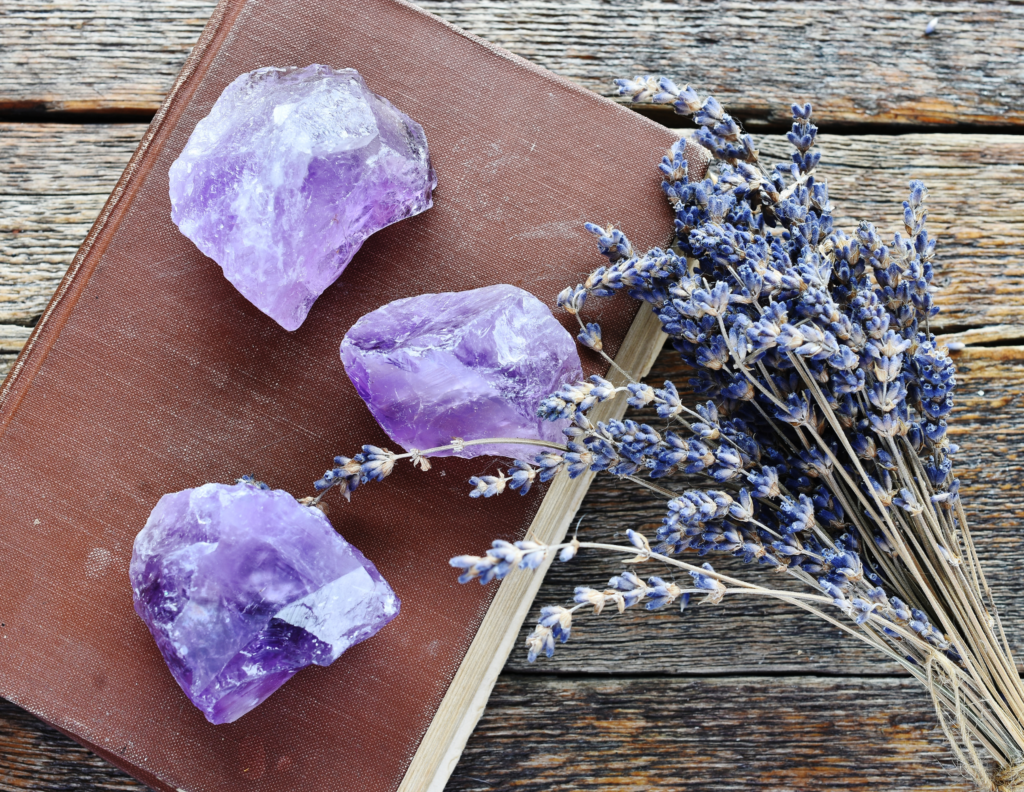
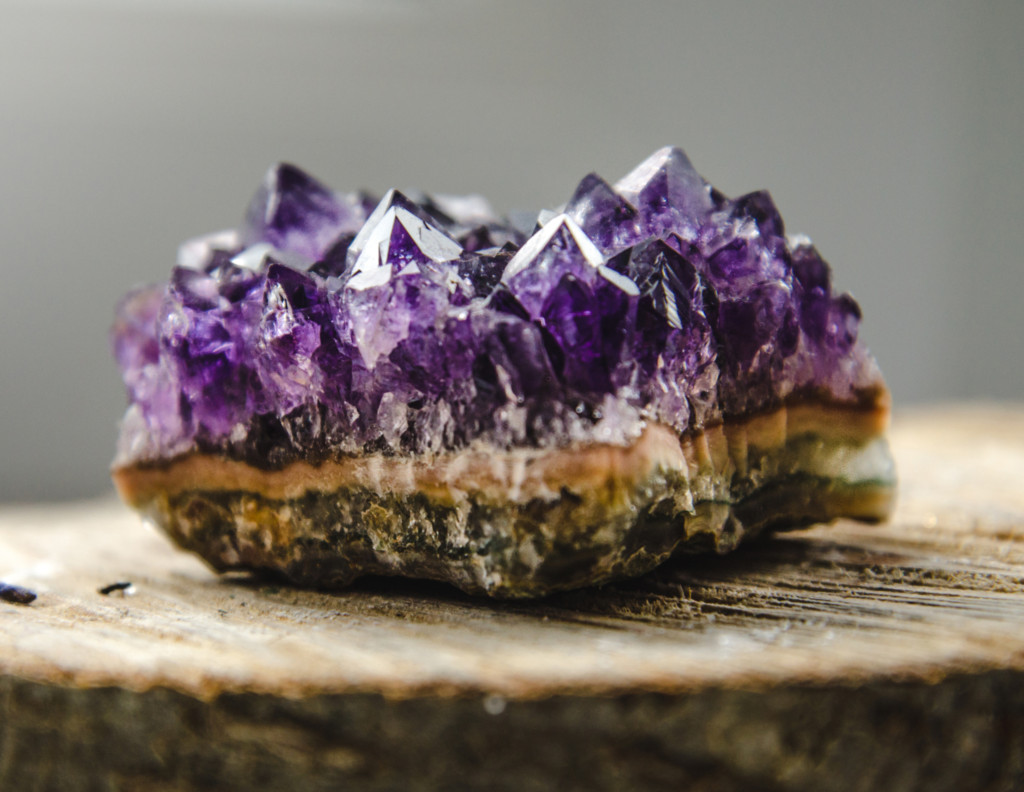
Amethyst is characterized by its violet to purple coloration, which can range from light lilac to deep, rich purple. This striking color results from iron impurities within the crystal structure of quartz. Amethyst forms primarily in geodes – hollow, crystal-lined rock cavities – and can be found in various locations worldwide, including Brazil, Uruguay, and Zambia.
Enhance Your Spiritual Practice
Discover our collection of digital planners and mystical tools designed to deepen your journey with tarot, crystals, and astrology.
Visit Our ShopHistorical Beliefs and Uses
Amethyst’s rich history spans many cultures and epochs:
- Ancient Egypt: Amethyst was highly valued, often carved into heart-shaped amulets for burial. It was associated with the afterlife and used in funerary jewelry. The stone was believed to protect the deceased on their journey to the afterlife.
- Ancient Greece and Rome: The stone was associated with Bacchus/Dionysus, the god of wine. It was common to drink wine from amethyst cups, believing it prevented intoxication. The word “amethyst” comes from the Greek “amethystos,” meaning “not drunken.”
- Medieval Europe: Amethyst became known as a “Bishop’s Stone,” symbolizing piety and celibacy. It was frequently set into ecclesiastical rings worn by Catholic bishops and other church officials.
- Renaissance: Leonardo da Vinci wrote that amethyst could quicken intelligence and dissipate evil thoughts.
- Chinese feng shui: Amethyst has long been used to enhance the wealth corner of a home or office.
- Native American cultures: Some tribes used amethyst in sacred pipes for ceremonial smoking, believing it carried prayers to the Great Spirit.
Mythological Associations
The Greek myth of Dionysus and Amethyst is the most well-known, but other cultures have their own amethyst lore:
- In Tibetan Buddhism, amethyst is sacred to Buddha and rosaries are often fashioned from it.
- Ancient Egyptians associated the stone with the god Thoth, the patron of magic and writing.
- In medieval European folklore, amethyst was believed to keep its wearer clear-headed and quick-witted in battle and business affairs.
- Some old European traditions held that if the name of the moon was engraved on an amethyst and worn as an amulet, it would protect against sorcery.
Traditional Symbolic Meanings
Beyond sobriety, royalty, and wisdom, amethyst has been associated with:
- Protection: Soldiers often carried amethyst amulets as protection in battle.
- Prophetic dreams: Placing an amethyst under your pillow was thought to bring about prophetic dreams.
- Courage: It was believed to instill courage and calmness in the face of danger.
- Healing: Traditional folk remedies used amethyst to treat insomnia and headaches.
- Chastity: The stone was thought to symbolize and promote faithfulness in relationships.
Modern Crystal Healing Beliefs
Contemporary crystal healers attribute a wide range of properties to amethyst:
- Emotional balance: Believed to soothe irritability, balance mood swings, dissolve negativity, and calm anger and anxiety.
- Addiction recovery: Often used in meditation practices for those recovering from addictive behaviors.
- Enhancing intuition: Thought to open the third eye chakra, enhancing psychic abilities and intuition.
- Sleep aid: Placed under pillows or near beds to promote restful sleep and prevent nightmares.
- Pain relief: Some believe it can help alleviate physical, emotional, and psychological pain.
- Cleansing other crystals: Amethyst is thought to have the ability to cleanse and recharge other crystals.
Uses in the Home for Wellbeing
Crystal enthusiasts incorporate amethyst into their living spaces in various ways:
- Entrances: Placing amethyst near doors or in foyers to create a protective barrier against negative energies.
- Meditation spaces: Using amethyst clusters or geodes to enhance spiritual practices and create a calming atmosphere.
- Offices or study areas: Keeping amethyst nearby to promote focus, clarity, and productivity.
- Bedrooms: Placing amethyst under pillows or on nightstands to promote restful sleep and ward off insomnia.
- Bathrooms: Using amethyst to create a spa-like, relaxing atmosphere.
- Living rooms: Displaying large amethyst geodes as conversation pieces and to promote harmonious family interactions.
- Technology zones: Placing small amethyst pieces near computers or Wi-Fi routers to supposedly neutralize electromagnetic stress.
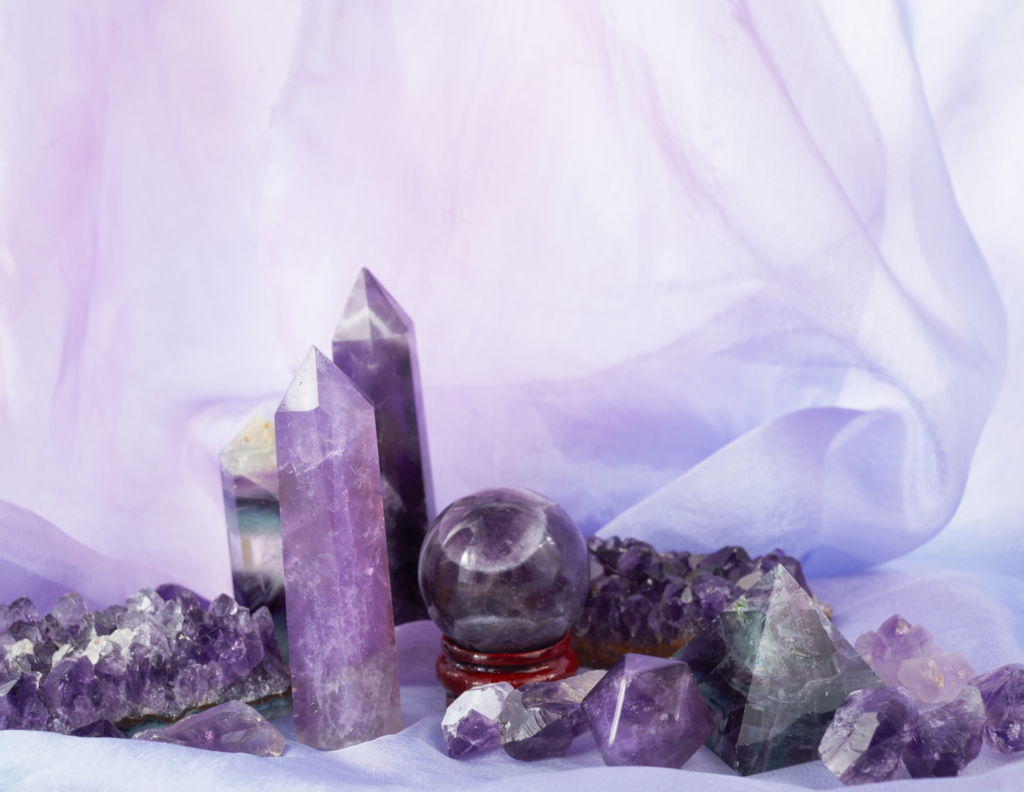
Astrological, Zodiac, and Divinatory Associations
Amethyst has long been associated with various astrological and divinatory practices, adding another layer to its mystical allure.
Astrological Connections
- Planetary Ruler: Amethyst is traditionally associated with the planet Jupiter, which is linked to expansion, wisdom, and spiritual growth.
- Zodiac Signs:
- Primary association: Pisces (February 19 – March 20)
- Secondary associations: Virgo, Aquarius, and Capricorn
- Birthstone: Amethyst is the modern birthstone for February.
Zodiac Significance
- Pisces: As the primary zodiac stone for Pisces, amethyst is believed to enhance the intuitive and empathic nature of this water sign. It’s thought to help Pisceans maintain emotional balance and tap into their innate creativity.
- Virgo: For Virgo, amethyst is said to soften this earth sign’s tendency towards criticism and perfectionism, promoting a more balanced perspective.
- Aquarius: Amethyst is believed to amplify Aquarius’s innovative thinking and humanitarian ideals.
- Capricorn: For Capricorn, amethyst is thought to encourage spiritual awareness, balancing this earth sign’s material focus.
Divination and Psychic Practices
Amethyst has been used in various forms of divination and psychic practices:
- Scrying: Polished amethyst spheres or mirrors are used for scrying, a practice of gazing into a reflective surface to receive psychic impressions or visions.
- Tarot and Oracle Decks: Amethyst is often associated with The High Priestess card in Tarot, representing intuition, mystery, and hidden knowledge. Some practitioners place an amethyst on their deck to cleanse and enhance its energy.
- Pendulum Work: Amethyst pendulums are popular for dowsing and receiving yes/no answers to questions.
- Meditation and Channeling: The stone is believed to enhance psychic abilities and is often used during meditation or channeling sessions to facilitate connection with higher realms or spirit guides.
- Dream Work: Placed under a pillow, amethyst is thought to promote prophetic dreams and aid in dream recall and interpretation.
- Chakra Work: Associated with the Third Eye (6th) and Crown (7th) chakras, amethyst is used in energy healing practices to open and balance these spiritual centers, enhancing intuition and connection to higher consciousness.
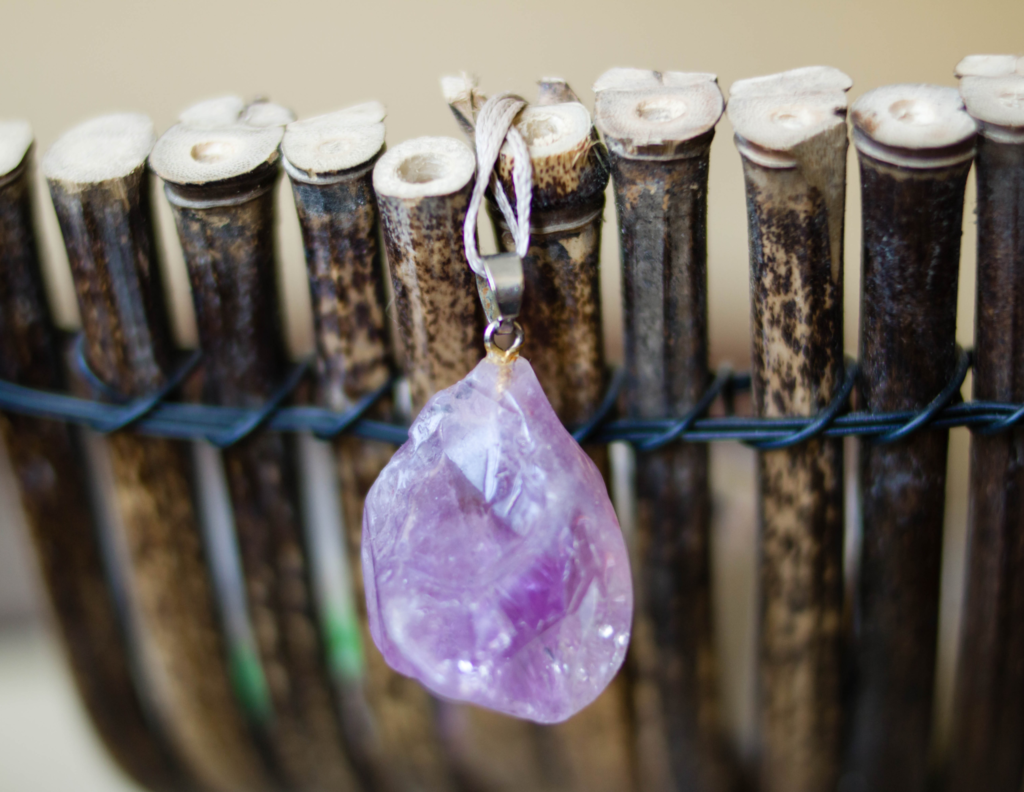
Numerology
In numerology, amethyst resonates with the number 3, which represents creativity, self-expression, and communication. This association further emphasizes the stone’s connection to spiritual growth and intuitive development.
While these associations are deeply rooted in various mystical traditions, it’s important to remember that they are based on metaphysical beliefs rather than scientific evidence. Nevertheless, many people find value and meaning in working with amethyst within these astrological and divinatory frameworks.
Scientific Perspective
It’s important to note that while amethyst has a rich cultural history and many people report positive experiences with it, there is no scientific evidence supporting the metaphysical properties attributed to crystals. Any benefits experienced may be attributed to the placebo effect or the psychological comfort derived from belief and ritual.
Conclusion
Whether valued for its beauty, its cultural significance, or its supposed metaphysical properties, amethyst continues to captivate people around the world. Its enduring appeal speaks to our human desire for connection – to the earth, to history, and to the mysteries of the universe. While science may not support claims of crystal healing, the allure of amethyst remains undiminished, inviting each of us to explore its facets, both literal and symbolic.