How to Use Crystals in Your Daily Meditation Practice
We may earn money or products from the companies mentioned in this post.
There’s something about holding a smooth, cool stone in your palm as you settle into stillness that feels different from sitting down empty-handed. Whether that difference comes from the crystal itself or from the ritual of choosing it, holding it, and setting an intention with it — it works for a lot of people. And that’s worth paying attention to.
Crystals have been part of human ritual and contemplative practice for thousands of years, and today they’re finding a natural home alongside modern meditation. This post looks at how to bring crystals into your daily practice in a way that actually makes sense — what the evidence says, which crystals tend to work well for meditation, and how to get started without overcomplicating things.
What the Research Actually Says
Before we get into which crystals to use and how, it’s worth being honest about what science does and doesn’t tell us here.
Enhance Your Spiritual Practice
Discover our collection of digital planners and mystical tools designed to deepen your journey with tarot, crystals, and astrology.
Visit Our ShopMindfulness meditation itself has solid evidence behind it. A 2021 review found that mindfulness-based practices can help reduce anxiety-related symptoms and may benefit people dealing with stress-related conditions. The practice of sitting quietly, focusing attention, and returning to the breath when the mind wanders has measurable effects on the nervous system. That part isn’t disputed.
Crystals as a healing tool are a different story. A 2025 study published in PubMed found that healing crystals did not reduce anxiety beyond what would be expected from placebo effects. Improvements seen in participants were linked to belief and expectancy rather than any property of the stone itself. This is consistent with other research in the area, and it’s worth knowing.
None of that means crystals have no place in your practice. The placebo effect is real and well-documented — people who use crystals as a focus tool during meditation often report feeling calmer, more grounded, and more intentional. That experience is genuine, even if the mechanism is different from what some crystal healing traditions claim. You can say honestly that crystals may help some people feel more focused or grounded during meditation, and that this effect likely comes from the ritual, the personal meaning attached to the stone, and the meditation practice itself.
The most useful framing — and the one this post takes — is crystals as meditation companions, not cures. They’re a tactile anchor, a symbolic cue, a way to signal to your mind and body that it’s time to slow down. That’s genuinely valuable, and it doesn’t require overstating what crystals do.
Why a Tactile Object Can Support Meditation
If you’ve ever tried to meditate and found your mind bouncing between your to-do list, tomorrow’s plans, and whatever you last watched on television, you’re not alone. One of the most common challenges beginners face is finding something to anchor attention to. Most traditions use the breath. Some use a mantra. Some use a visual focus point.
A crystal adds a tactile dimension to this anchoring. Holding something physical — especially something with weight, texture, and temperature — gives the body a sensory reference point that can be easier to return to than breath alone, especially for people who find it hard to feel their breathing or who carry a lot of physical tension.
If you’ve been exploring meditation for beginners and struggling to settle, introducing a crystal as a focus object is one of the gentler adjustments you can make. It doesn’t change the fundamental practice, but it gives your hands somewhere to be and your mind something to come back to when it wanders.
Choosing a Crystal for Meditation
There’s no single right answer here, and you shouldn’t feel pressured to own a particular stone to meditate effectively. That said, different crystals carry different traditional associations and physical qualities, and those associations can add a layer of intention to your practice.
| Crystal | Best For | Chakra | Energy |
|---|---|---|---|
| Amethyst | Calm, clarity, intuition | Third eye, crown | Calming |
| Clear Quartz | Intention-setting, focus | All chakras | Amplifying |
| Selenite | Mental clarity, stillness | Crown | Calming |
| Obsidian | Grounding, clearing mental noise | Root | Grounding |
| Black Tourmaline | Scattered or anxious practice | Root | Grounding |
| Tiger’s Eye | Morning intention, focus | Solar plexus | Grounding & energising |
| Rose Quartz | Self-compassion, forgiveness | Heart | Gentle & nurturing |
| Rhodonite | Emotional balance, grief | Heart | Healing |
| Moonstone | Intuitive, receptive practice | Crown, sacral | Receptive |
| Lapis Lazuli | Wisdom, self-honesty, decisions | Third eye, throat | Expansive |
| Carnelian | Motivation, carrying insight into action | Sacral, solar plexus | Energising |
Crystals for Calm and Clarity
Amethyst is one of the most widely used crystals in meditation practice. Its violet colour has long been associated with spiritual work, and its smooth, cool surface makes it pleasant to hold during longer sits. Traditionally linked to the third eye and crown chakras, it’s often chosen by people working on intuition, clarity, or emotional calm.
Clear quartz is another strong choice. Clear quartz is sometimes called the “blank canvas” of the crystal world — it’s used to amplify intention rather than carry a specific energy of its own. If you want to set a clear, focused intention at the start of your meditation, holding a piece of clear quartz while doing so can make that act feel more deliberate.
Selenite is particularly popular for meditation because of its calm, quiet quality. Selenite is soft and light, with a silky texture that many people find soothing to handle. It’s traditionally associated with mental clarity and calm — qualities that pair well with any style of meditation practice.
Crystals for Grounding
For people who find meditation mentally stimulating to the point of agitation, or who tend to feel floaty or disconnected during practice, grounding crystals can help. Obsidian is dense and cool with a glassy surface — physically, it has the kind of weight that encourages a sense of being anchored. It’s traditionally associated with grounding energy and clearing mental noise.

Black tourmaline works similarly. If your meditation practice tends to feel scattered or anxious, holding something that feels physically solid in your palm can serve as a useful reminder to come back to the body.
Tiger’s eye sits somewhere between grounding and energising — it’s traditionally linked to focus and clarity of purpose, which makes it a good choice for morning meditation when you’re setting intentions for the day ahead.
Crystals for Emotional Work
Rose quartz is the obvious choice for meditation practices focused on self-compassion, forgiveness, or working through emotional difficulty. Its soft pink colour and traditional associations with gentleness make it a natural fit for this kind of inner work.
Rhodonite is less well-known but equally useful for emotional meditation. Its pink and black patterning is traditionally linked to both the heart chakra and emotional balance — useful if you’re working with grief, resentment, or self-criticism.
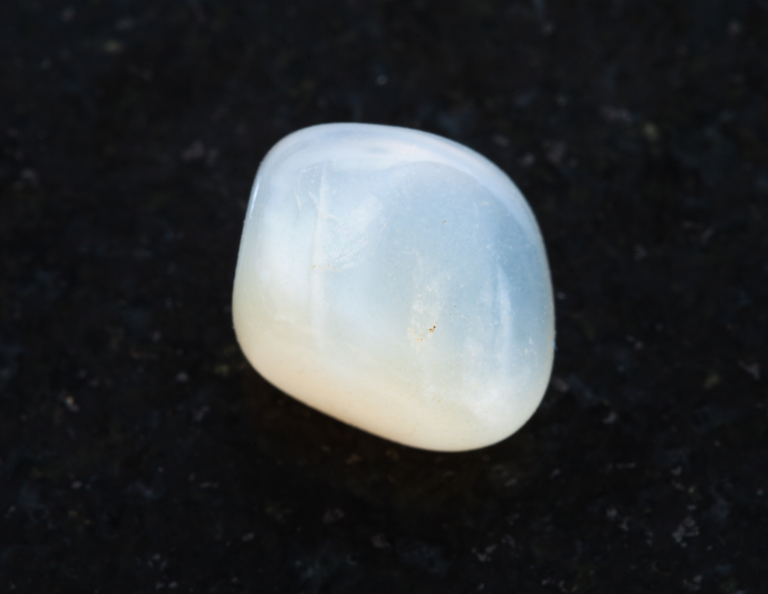
Moonstone is a favourite for intuitive, receptive meditation styles — the kind where you’re not directing your mind toward anything specific, but simply sitting open and noticing what arises. If you work with lunar cycles, bringing moonstone into your new moon or full moon meditation is a meaningful way to mark the occasion.

Crystals for Insight and Truth
Lapis lazuli has been used in contemplative and ritual practice since ancient Egypt and Mesopotamia. Its deep blue, flecked with gold, is visually striking and traditionally associated with wisdom, truth, and the expansion of perception. It works well for meditation practices focused on decision-making, self-honesty, or accessing deeper understanding.
Carnelian is a warmer choice — energising rather than calming. If your meditation practice sometimes tips into passivity or you find it hard to carry insights into action after sitting, carnelian’s traditional associations with motivation and courage make it a useful counterbalance.
How to Actually Use Crystals in Meditation
Before You Sit Down
Most people who use crystals in meditation have some kind of pre-session ritual — something brief that marks the transition between ordinary activity and intentional stillness. Setting an intention is the simplest version of this. Hold your chosen crystal in both hands, close your eyes, and take a few slow breaths. Think — or say quietly — what you’re bringing to this session. It might be something specific (clarity on a decision, compassion for yourself or someone else) or something open (simply being present).
This takes about thirty seconds and costs nothing. Its value is in the signal it sends to your own mind: we’re doing this now. The crystal becomes a physical trigger for that state, and over time, simply picking it up can begin to cue a shift in mental mode.
Understanding your seven chakras can help you choose your crystal more intentionally. If you’re drawn to third eye work, reach for amethyst or lapis lazuli. If you’re focusing on the heart, rose quartz or rhodonite. This isn’t essential — following instinct is equally valid — but it adds a layer of meaning if that kind of framework resonates with you.
During Meditation
The simplest approach is to hold your crystal in one or both hands throughout your session, or to place it on a surface in front of you at eye level if you prefer not to hold anything. Some people place crystals on the body — on the chest during lying-down meditation, for example, or rested on the lap.
When your mind wanders (and it will, regardless of how experienced you are), the return to noticing the weight, temperature, or texture of the crystal in your hands is another option alongside returning to the breath. You don’t have to choose between them — some practitioners alternate between breath and crystal as their anchor.
If you use guided meditation rather than silent sitting, the crystal still has a role as a grounding object. Hold it during the session and treat it as a physical anchor that keeps part of your attention in the room, in your body, in the present.
Building a Small Ritual Around It
One thing that genuinely seems to help people establish a consistent meditation habit is creating a physical space and set of objects that belong to that practice. If you have a corner of a room, a cushion, and a small surface where your crystals live, the act of sitting down in that space begins to cue the mental shift toward stillness before you’ve even started.
This connects naturally to altar-keeping as a practice. If you already have an altar or are curious about building one, your meditation crystals sit naturally within it — alongside a candle, perhaps a few other meaningful objects, and whatever else holds significance for your practice. If you’re drawn to working with lunar cycles, the post on how to create a moon phase altar for each lunar cycle offers a useful framework for bringing that structure into your space.
Cleansing Your Crystals
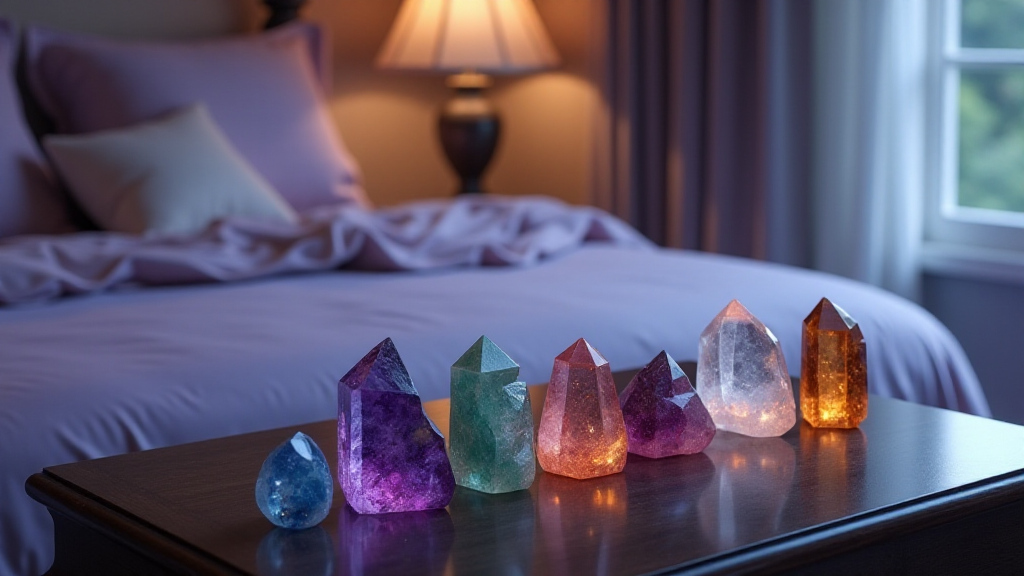
This is where you’ll encounter the widest range of approaches, from thoroughly practical to thoroughly ceremonial. The practical version: many crystals pick up physical residue from handling — skin oils, dust — and rinsing them in cool water (where safe — not all crystals are water-safe) or leaving them in sunlight or moonlight is a simple maintenance practice.
The ceremonial version adds intention to this process: you’re clearing the energy the crystal has accumulated and resetting it for the next use. Whether you approach this practically or ceremonially, the habit of periodically attending to your crystals keeps them as active, chosen objects in your practice rather than things you’ve forgotten about.
Matching Crystals to Different Meditation Styles
Not all meditation looks the same, and different styles pair naturally with different crystals.
Breath-focused or mindfulness meditation works well with almost any crystal — the tactile anchor is complementary rather than competing with the practice. Clear quartz, amethyst, or selenite are all good companions here.
Body scan or relaxation practices (progressive muscle relaxation, yoga nidra) work well with heavier, grounding stones. Obsidian or black tourmaline placed on or held near the body during a lying-down practice can support the sense of physical release.
Visualisation or creative meditation — the kind where you’re building inner imagery or journeying through imaginative space — pairs well with stones traditionally associated with vision and perception: moonstone, labradorite, lapis lazuli.
Loving-kindness (metta) practice is the most obvious fit for heart-chakra stones: rose quartz, rhodonite. Holding one of these while extending compassion toward yourself and others adds a physical dimension to a practice that can otherwise feel quite abstract.
If you’re interested in exploring common meditation techniques across these different styles, that post covers the variety of approaches and their different applications.
A Simple Starting Practice
If you’re new to both meditation and crystals, here is a genuinely straightforward way to start:
- Choose one crystal that you’re drawn to — visually, texturally, or intuitively. It doesn’t have to be expensive or famous. A piece of amethyst, rose quartz, or clear quartz from a crystal shop is a perfectly good starting point.
- Set aside ten minutes. Sit somewhere quiet with your feet flat on the floor, or cross-legged if that’s comfortable.
- Hold the crystal in your non-dominant hand (or both hands, cupped). Close your eyes.
- Take three slow breaths in through the nose and out through the mouth.
- Set a brief intention — even something as simple as “I’m here to be still for a few minutes.”
- Then sit. Focus on your breath. When your mind wanders, notice the crystal in your hand and return. That’s it.
Do this for a week before adding anything else. See whether it changes how the ten minutes feels, whether it helps you settle more quickly, whether you look forward to it more or less. Your experience is your most useful data point.
Final Thoughts
Crystals won’t meditate for you, and they won’t produce results on their own. But for many people, they add something real to the practice — a sense of intention, a physical anchor, a small ritual that makes the act of sitting down to meditate feel meaningful rather than effortful.
While crystals are not proven to treat anxiety or other health conditions, many people use them in meditation as a tactile reminder to slow down, focus, and set an intention. That’s not a small thing. Anything that helps you actually show up to a practice that genuinely benefits you is worth considering.
Start with what you’re drawn to. Keep it simple. See what happens.
Continue Your Journey
- Meditation for Beginners: 7 Techniques to Start Your Practice — New to meditation? Start here for a grounded introduction to the basics.
- The Seven Chakras: A Complete Beginner’s Guide — Understanding the chakra system helps you choose crystals with more intention.
- Uncover the Best Crystals for Tarot Readings — If you use tarot alongside meditation, this guide covers which crystals complement your readings.
- How to Create a Moon Phase Altar for Each Lunar Cycle — Bring your meditation crystals into a larger ritual practice with lunar cycle working.
- Unlock Your Dreams: 7 Powerful Crystals for Dreams — Extend your crystal practice into the night with these dream-supportive stones.
Have you tried using crystals in your meditation practice? Which stone do you reach for, and has it changed how your sessions feel? Share your experience in the comments — I’d love to hear what’s working for you.
Enjoyed this post? Sign up to the Weird Headlines newsletter for crystal guides, spiritual insights, and practical mysticism delivered straight to your inbox.