Labradorite Crystal: Awakening Magic & Transformation
We may earn money or products from the companies mentioned in this post.
There are some crystals you pick up and feel an immediate shift — something settles, or something stirs. Labradorite is firmly in the “something stirs” category. With its dark, moody exterior and those sudden flashes of electric blue, gold, and green that seem to appear from nowhere, it looks exactly like what it is: a stone with serious mystical credentials.
Known as the Stone of Magic and Transformation, labradorite has been used for centuries by spiritual seekers, shamans, and anyone standing at a crossroads in life. This post covers everything you need to know — from its origins in Inuit legend to its modern-day uses in meditation, protection, and personal reinvention.
What Is Labradorite?
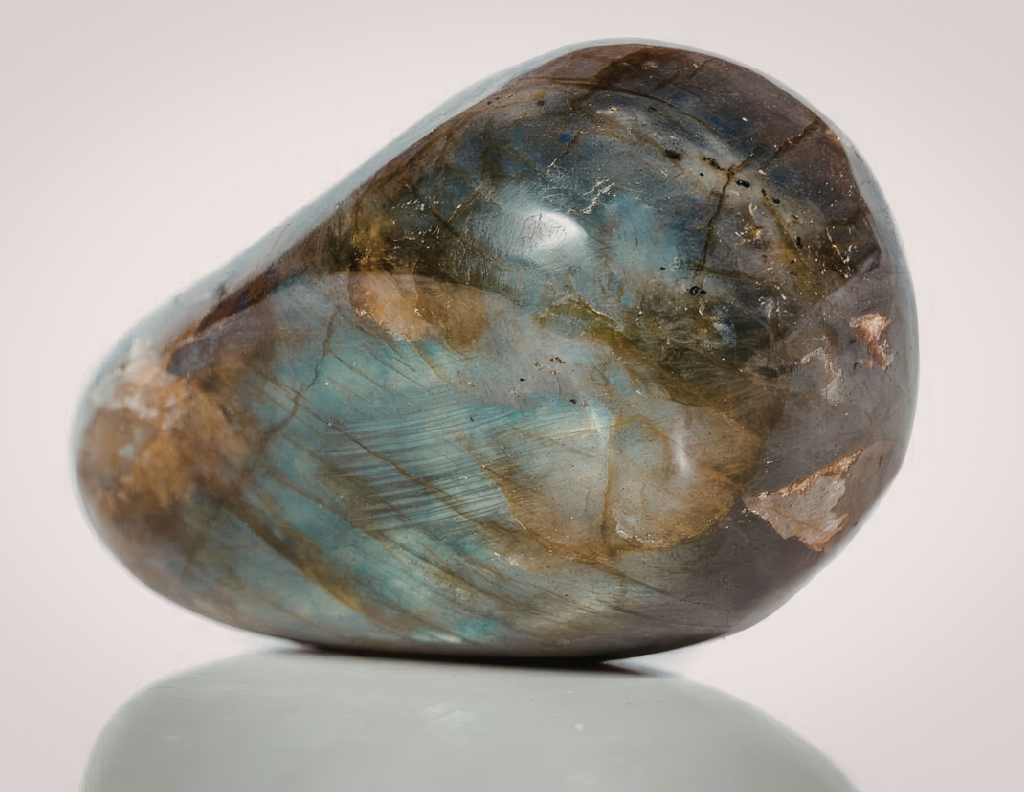
Labradorite is a feldspar mineral first recorded by Western scientists in the 1700s along the coast of Labrador, Canada. But the Indigenous Inuit peoples of the region had known about it long before that — and their relationship with it runs deeper than any geological survey.
Enhance Your Spiritual Practice
Discover our collection of digital planners and mystical tools designed to deepen your journey with tarot, crystals, and astrology.
Visit Our ShopThe stone’s most distinctive feature is labradorescence — that otherworldly iridescent shimmer that shifts as the light catches it. It’s not a surface coating or a treatment; it’s caused by light scattering between microscopic layers within the stone itself. The effect is somewhere between a rainbow trapped in rock and a portal opening without warning.
Colours range from the most common steely grey-blue to rarer specimens showing deep gold, copper, orange, and even red. High-quality labradorite with exceptional colour range is sometimes called Spectrolite.
The Northern Lights Origin Story
The Inuit legend behind labradorite is one of the most evocative origin stories in crystal lore. According to the tale, the Northern Lights were once trapped within the coastal rocks of Labrador — frozen there until a warrior struck the stones with his spear and freed most of the auroras into the sky. The light that remained, still caught inside the stone, became labradorite.
This connection to aurora energy is exactly why so many practitioners work with labradorite for intuition, mystery, and walking between worlds. It carries that quality of something half-revealed, half-hidden — visible only when the light hits it just right.
Labradorite Meaning and Energy
Labradorite has a reputation for being both mystical and practical. It doesn’t just offer spiritual fireworks; it pairs its awakening energy with genuine protective support.
The Stone of Magic
Labradorite is strongly associated with magic in the truest sense — not theatrical tricks, but the real, felt sense of synchronicity and connection. It’s often described as a stone that heightens awareness of meaningful coincidences, opens you to spiritual guidance, and makes you more attuned to the subtle signals around you.
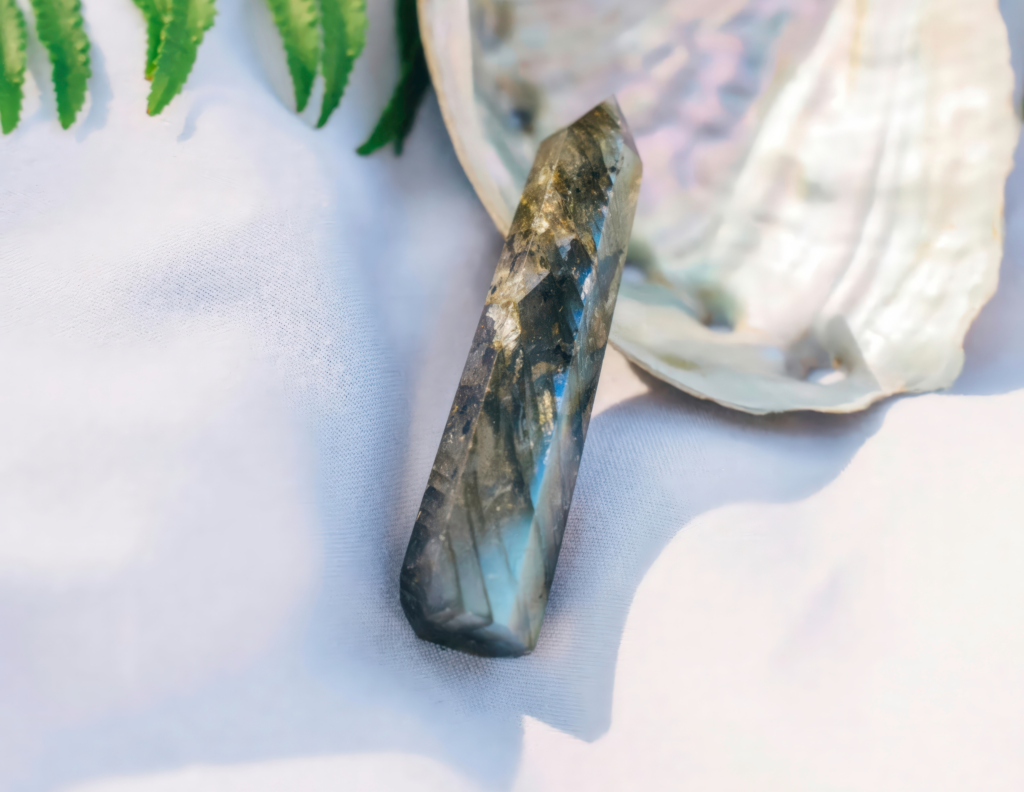
This is why it’s particularly popular among practitioners who work with tarot card spreads, intuitive readers, and those developing their psychic senses. It’s also frequently recommended alongside crystals for tarot readings for this reason.
Labradorite is linked to the third eye and crown chakras — the energy centres associated with intuition, higher perception, and connection to something beyond the everyday. Working with this stone consistently can help sharpen those channels, making meditation, dreamwork, and intuitive practices feel more grounded and clear. If you’re building a foundation in chakra balancing, labradorite is a natural fit for the upper chakras.
Transformation and Soul Alignment
Beyond the mystical, labradorite is a stone of change. It’s frequently recommended when you’re stepping into a new chapter — a career shift, a spiritual awakening, a relationship transition, or any period where the old version of you no longer quite fits.
It supports what some practitioners call inner alchemy: the shedding of identities, patterns, or beliefs that no longer serve, and the gradual revealing of who you actually are underneath them. This isn’t gentle, passive crystal energy — labradorite has a catalytic quality. It tends to accelerate the changes that are already underway, offering courage and perseverance to see them through.
If you’re doing any kind of shadow work or deep self-inquiry, labradorite makes a powerful companion. It pairs particularly well with obsidian crystal for shadow work, offering the same willingness to go into darker territory — but with a little more mystical shimmer along the way.
Labradorite Healing Properties
Like all crystals, labradorite is a complementary practice — it supports wellbeing alongside, not instead of, medical or therapeutic care. That said, it has a long history of use for specific emotional and energetic purposes.
Emotional and Mental Support
Labradorite is known for helping people move through anxiety, self-doubt, and the kind of over-thinking that comes with being in a liminal space. When you’re in the middle of a transition and nothing feels certain yet, it offers a steadying energy — not false reassurance, but genuine resilience.
It’s also associated with releasing old emotional baggage: patterns inherited from family systems, wounds from past relationships, or outdated stories about what you’re capable of. It encourages honest self-reflection without tipping into harsh self-criticism.
Protection for Empaths
Labradorite is one of the most consistently recommended stones for empaths and highly sensitive people. It’s described as creating a protective energetic seal around the aura — helping you engage fully with the world without absorbing its stress, other people’s moods, or draining energies.
This makes it genuinely useful as an everyday carry stone. Wearing it or keeping it close acts as an ongoing filter rather than a once-a-day practice. If you’re drawn to protective stones generally, it complements black tourmaline crystal well — tourmaline being the stronger, more grounding shield, and labradorite adding the intuitive, awareness-enhancing layer.
Intuition and Psychic Development
If you’re actively working to develop your intuitive senses — whether that’s through meditation techniques, tarot, or simply learning to trust your gut — labradorite is the stone most practitioners reach for first. It doesn’t hand you psychic abilities wrapped in a bow, but it does help clear the interference that makes it hard to hear your own inner knowing.
| Property | What It Supports |
|---|---|
| Chakra | Third Eye, Crown |
| Element | Water, Wind |
| Zodiac | Scorpio, Sagittarius, Leo |
| Planet | Uranus, Moon |
| Hardness (Mohs) | 6 – 6.5 |
| Key Energy | Awakening, transformation, protection, intuition |
| Best For | Empaths, spiritual seekers, those in transition |
How to Use Labradorite
Labradorite is a versatile stone that shows up in almost every area of spiritual practice. Here are the main ways people work with it.
Meditation
Holding labradorite over the third eye (between the brows) or the heart during meditation is one of the most popular methods. Set an intention before you begin — something around awakening your intuition, calling in clarity for a decision, or inviting transformation in a specific area. The stone responds well to conscious direction.
If you’re newer to meditation, the meditation for beginners guide has techniques that work well with crystal practice. Even five minutes of quiet focus with labradorite in hand can create a noticeable shift in mental clarity over time.
Jewellery and Everyday Wear
Wearing labradorite as a pendant, ring, or bracelet is one of the easiest ways to stay within its field throughout the day. It’s particularly effective in pendant form, worn close to the heart or throat, where it can support both emotional processing and communication.
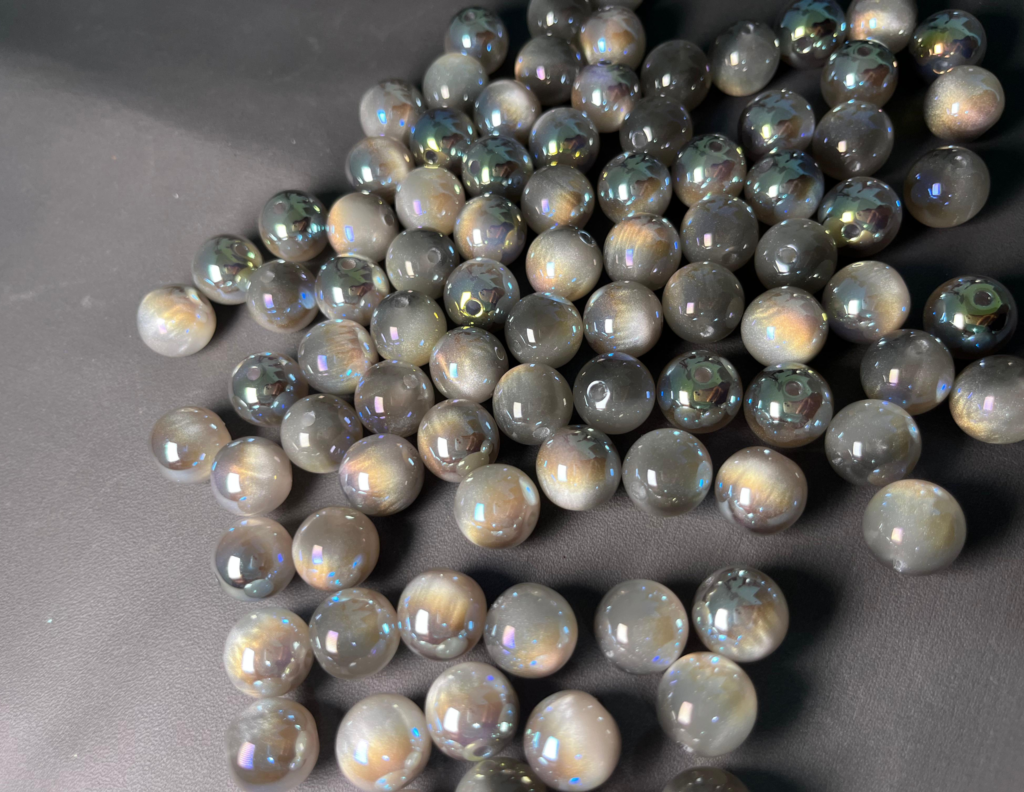
As an everyday protection stone for empaths, it works best when worn consistently rather than occasionally — think of it as a piece of your energetic toolkit rather than an occasional accessory.
Tarot and Divination Work
Place labradorite on your table or hold it briefly before a reading to sharpen your intuitive focus. Many readers keep it as part of their tarot setup alongside cleansing tools and other crystals. It’s particularly good for readings where you need to access deeper layers of meaning rather than surface-level answers.
You might also consider keeping it near your tarot deck during storage — the idea being that it helps maintain a clear, protected energetic environment around your tools.
Crystal Grids for Transformation
For bigger intentions around change, labradorite works beautifully in a crystal grid. Combine it with clear quartz to amplify its energy, amethyst for spiritual depth, or moonstone to enhance its intuitive, lunar qualities. The autumn crystal grids approach from the DIY autumn crystal grids post translates well to any seasonal transition.
A simple transformation grid uses labradorite at the centre, with six points of clear quartz around it. Set your intention clearly before activating the grid — the more specific you are about what transformation you’re calling in, the more focused the energy.
Labradorite and the Moon
Labradorite has a natural affinity with lunar energy — both are associated with hidden depths, cyclical change, and the light that exists even in darkness. Many practitioners charge their labradorite under the full moon to deepen its mystical, intuitive qualities.
The waxing moon is good for setting intentions with labradorite around growth and awakening. The full moon amplifies its energy for major intentions or when you want to strengthen its protective qualities. The waning moon suits releasing work — letting go of old patterns or shedding what no longer serves.
If you’re working with moon phases and their influence in your practice, labradorite is one of the crystals most worth incorporating into your lunar rituals. It also fits naturally into how to create a moon phase altar for anyone building out a dedicated lunar practice.
How to Cleanse and Care for Labradorite
Labradorite is a reasonably robust stone at 6–6.5 on the Mohs hardness scale, but its iridescent surface deserves gentle handling.
Cleansing methods that work well:
- Running water (brief, not prolonged)
- Moonlight — particularly effective given its lunar associations
- Sound cleansing with a singing bowl or bells
- Smoke cleansing with sage, palo santo, or your preferred herb
- Selenite charging plates — placing your labradorite on selenite crystal overnight is one of the easiest and gentlest options
Methods to approach with caution:
- Salt — avoid prolonged contact as it can damage the surface over time
- Sunlight — extended sun exposure can fade its colours
- Harsh chemicals or abrasive cloths
For physical cleaning, warm soapy water and a soft cloth is all you need. Pat dry thoroughly and store it away from harder stones that could scratch the surface.
Fun Facts About Labradorite
- Despite being named after Labrador, Canada, labradorite is also found in Finland, Madagascar, Mexico, and Russia. The Finnish variety (Spectrolite) is considered among the finest in the world for colour intensity.
- The technical term for its rainbow shimmer — labradorescence — is named after the stone itself, not the other way around.
- In some shamanic traditions, labradorite was specifically used for journeying between states of consciousness — not as a metaphor, but as a literal tool for altered states during ceremony.
- It belongs to the same mineral family as moonstone (both are feldspars), which may explain their shared lunar and intuitive associations.
- Labradorite is one of the few crystals that genuinely looks better in low light than in full sun — which feels entirely on brand for a stone associated with liminal spaces and hidden depths.
Final Thoughts
Labradorite is one of those crystals that earns its reputation. It isn’t flashy in the way a bright citrine or a vivid rose quartz is — its magic is more subtle, more interior. It reveals itself gradually, just like the flash of colour that only appears when the light catches it at the right angle.
If you’re drawn to it, that’s usually a signal worth paying attention to. Whether you’re in a period of major change, developing your intuition, or simply needing something that holds a protective field around you while the world does its thing — labradorite is a stone that shows up for all of it.
Work with it intentionally, cleanse it regularly, and don’t be surprised if things start to shift.
Have you worked with labradorite? We’d love to know — drop a comment below and share what you noticed.
Continue Your Journey
- Unlock the Magic of Clear Quartz: The Master Healer Crystal — amplify labradorite’s energy in grids and rituals
- Moonstone Crystal: Harnessing Lunar Energy & Intuition — another feldspar with deep lunar and intuitive connections
- Amethyst: A Crystal of Beauty and Belief — pair with labradorite for spiritual depth and calm
- Obsidian Crystal: Shadow Work & Powerful Protection — for those drawn to labradorite’s transformative, shadow-facing side
- The Seven Chakras: A Complete Beginner’s Guide — understand the third eye and crown chakras labradorite works with
Want more crystal guides, tarot deep-dives, and spiritual practice tips? Subscribe to the Weird Headlines newsletter and get new posts straight to your inbox.